
AI in Medicine: When Accuracy Isn't Enough if It Can't Be Explained
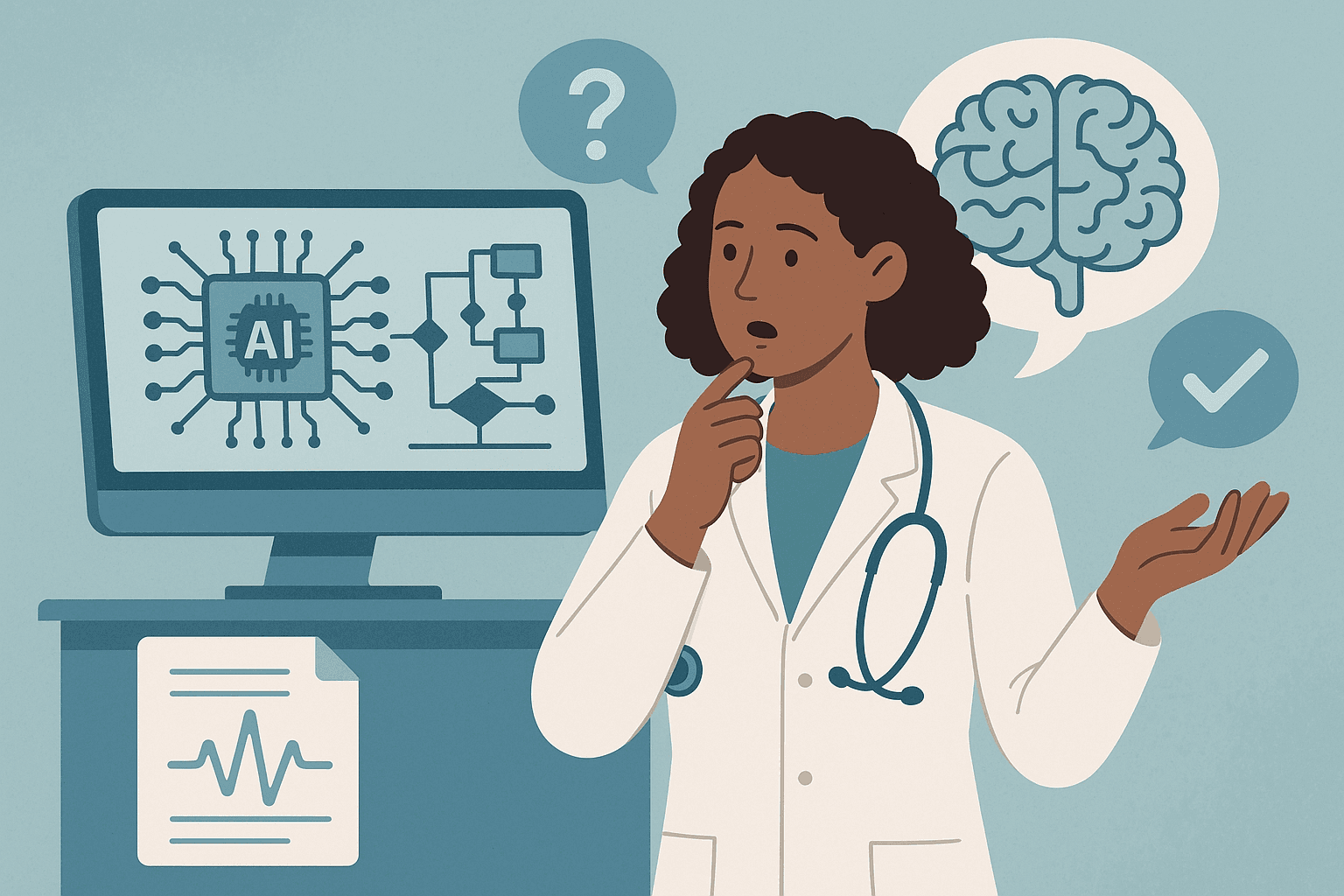
Just a week ago, Microsoft announced that its new AI tool diagnoses with 85% accuracy – four times better than experienced doctors. But here's the question that should keep us up at night: would you trust a diagnosis that even your own doctor cannot explain?
This is not science fiction. It's the reality of medicine in 2025, where "black box" algorithms are making decisions that can save or cost lives, while healthcare professionals watch without understanding the "why" behind each recommendation.
The Dilemma of Precision Without Transparency
The paradox is fascinating and terrifying at the same time. Current medical AI systems consistently outperform humans in diagnostic accuracy. In 2024, melanoma detection algorithms achieved over 95% accuracy, surpassing dermatologists with decades of experience. In radiology, cardiology, and ophthalmology, AI is redefining the standards of precision.
But there's a problem: no one understands how they reach these conclusions.
Imagine this situation: you arrive at the emergency room with confusing symptoms. The AI system recommends immediate surgery, but when you ask "why?", your doctor can only respond: "The algorithm says it's necessary, and it's usually right."
Would you have the surgery?
When Black Boxes Fail: Real Cases That Changed Everything
History is full of reminders about why transparency matters:
2019: A triage algorithm in US hospitals systematically underestimated the severity of African American patients, perpetuating racial biases for months without detection.
2021: An AI system for COVID-19 diagnosis developed 97% accuracy in tests, but failed spectacularly in the real world because it had learned to identify... the X-ray machine model, not the disease.
2023: A sepsis prediction algorithm in the ICU generated so many false alarms that doctors began to ignore it, resulting in undetected real cases.
The pattern is clear: without explainability, there is no trust. Without trust, there is no adoption. Without adoption, there is no benefit.
What is Explainable AI and Why Does It Matter Now?
Explainable AI (XAI) is not just about making algorithms "talk" – it's about designing systems that can justify their decisions in a way that is understandable to humans.
In medicine, this means:
Diagnostic transparency: "I recommend this test because I detected patterns similar to previous cases of X disease in these specific areas of the image."
Treatment justification: "I suggest this medication based on your history, current symptoms, and the response of patients with a similar profile."
Contextualized alerts: "This combination of symptoms has a 78% probability of indicating Y condition, based on these specific factors."
The difference is transformational. A doctor can evaluate, question, and complement an explained recommendation. With a black box, they can only obey or ignore.
The Coming Regulation: The FDA Charts the Path
The FDA is not waiting. In June 2024, it published its "Guiding Principles for Transparency in Machine Learning-Enabled Medical Devices," establishing that:
- Medical AI devices must provide understandable explanations of their decisions
- Manufacturers must demonstrate how their systems handle edge cases and unforeseen situations
- Transparency is not optional – it is a regulatory requirement
Europe is going further. The AI Act requires that high-risk AI systems (including medical applications) be "sufficiently transparent to allow users to interpret the system's output."
The message is clear: the era of black boxes in medicine is ending.
Practical Implementation Framework for Hospitals
How can healthcare centers prepare? Here is the framework I recommend:
1. Audit of Current Systems
- Identify what algorithms you use and their level of explainability
- Assess the impact of unexplained decisions on patient outcomes
- Map critical points where transparency is essential
2. Selection Criteria for New Tools
- Explainability by default: Can the system justify each recommendation?
- Adjustable granularity: Can you get simple or detailed explanations as needed?
- Clinical validation: Are the explanations medically coherent?
3. Staff Training
- Train doctors to interpret outputs from explainable AI
- Develop protocols for questioning and validating algorithmic recommendations
- Establish escalation paths when explanations are unsatisfactory
4. Continuous Monitoring
- Track the correlation between AI explanations and real outcomes
- Identify patterns of algorithmic decisions that require human review
- Adjust confidence levels based on explained performance
Tangible ROI: Beyond Precision
The benefits of explainable AI go beyond transparency:
- Reduced liability: Justified decisions = lower legal risk
- Better adoption: Doctors trust systems they understand more
- Faster diagnoses: Explanations accelerate clinical validation
- Less burnout: Professionals feel empowered, not replaced
A 2024 study in European hospitals showed that implementing explainable AI reduced diagnosis time by 34% while increasing physician satisfaction by 67%.
The Future: Towards Collaborative Medicine
Explainable AI is not the end of the road – it's the beginning of something bigger: collaborative medicine, where humans and algorithms work as informed partners.
Imagine a future where:
- AI systems not only diagnose but teach while doing so
- Doctors can debate with algorithms, improving both in the process
- Patients receive understandable explanations about their diagnosis and treatment
- Medicine becomes more precise and more human
The Decision is Now
Microsoft's tool can diagnose better than experienced doctors, but does it matter if no one understands how? Precision without explainability is a dead end.
Healthcare centers that adopt explainable AI now will not only comply with future regulations – they will lead the transformation towards smarter, more transparent, and more reliable medicine.
The question is not whether explainable AI will come to medicine. It's already here.
The question is: will you be ready when your patients ask "why?"?