
How to Use “Prompt Injection” to Combat Shadow AI in Your Company
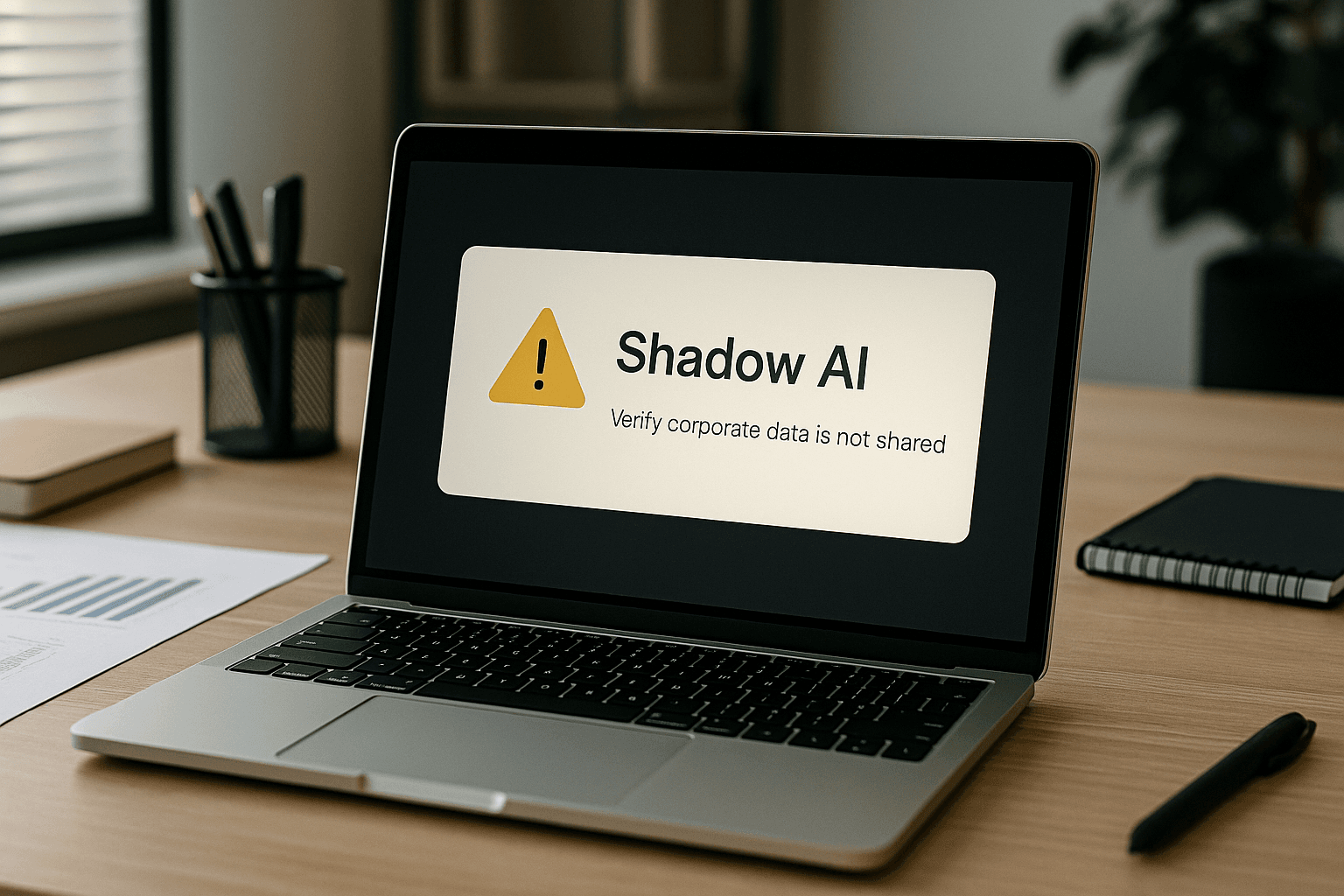
The use of generative artificial intelligence tools (ChatGPT, Copilot, Claude, Gemini…) has skyrocketed in professional environments. However, this has also led to the growth of a silent and concerning phenomenon: Shadow AI—the use of AI outside of company control or approval.
While curiosity and initiative are good news, when employees copy and paste emails, reports, or code snippets into external models, corporate data can end up outside the security perimeter. This opens the door to compliance risks, information leaks, or the loss of intellectual property.
The Hidden Risk of Shadow AI
Shadow AI is usually not malicious; it stems from a desire to be more productive. The problem is that these models—no matter how reliable they may seem—do not always guarantee confidentiality, nor do they allow for control over how the entered data is used or stored.
According to Gartner, more than 70% of organizations have already detected cases of Shadow AI within their teams, and many discovered it following a data leak or incident.
Regulations such as the General Data Protection Regulation (GDPR), the NIS2 Directive, or ISO/IEC 27001 standards require traceability, access control, and preventive measures against leaks. The unsupervised use of external AI tools makes it impossible to comply with these obligations.
The Solution: Using Prompt Injection as a Defense
At Montevive, we like to turn problems around, and this case is no exception. One of the best-known AI attack techniques, prompt injection, can be transformed into a defensive and awareness mechanism.
This idea was recently explored by Eye Security, which proposes inserting hidden instructions within corporate documents (in headers, footers, or metadata) to trigger a warning when the content is copied into an external AI tool.
When someone pastes that text into ChatGPT or another assistant, the AI receives an automatic instruction that can generate a message such as:
“⚠️ This text originates from a corporate document. Before continuing, ensure that you are not sharing sensitive or confidential information.”
It is not about blocking the use of AI, but rather alerting at the critical moment when the user is about to send data outside the secure environment.
How to Implement It in Your Organization
This technique can be applied in various ways, depending on company tools and policies:
- Email signatures: Insert the snippet within the signature so that any text copied into an external AI triggers the warning.
- Office or PDF documents: Include the notice in metadata, headers, or automatic footers using governance tools or corporate templates.
- Exports from SaaS platforms: Integrate the warning into downloadable reports from tools like Notion, Confluence, or Salesforce.
For companies with a more technical approach, it can also be combined with Data Loss Prevention (DLP) systems, such as Microsoft Purview or Google Workspace DLP, extending the scope of protection.
More Culture, Less Censorship
The traditional security approach—blocking, restricting, prohibiting—does not fit the speed at which artificial intelligence evolves. “Defensive prompt injection” promotes a culture of active awareness: it does not prevent the use of AI, but it does remind the user of their responsibility.
Models like Zero Trust Security or “nudging” in cybersecurity (small behavioral nudges) demonstrate that user training and awareness are more effective in the long term than mere technological restriction.
At Montevive, we believe that security should not be a wall, but an intelligent reminder. That is why we help companies design strategies that balance privacy, productivity, and technological exploration, always keeping data under control.
In Summary
Shadow AI is a reality growing as fast as the adoption of artificial intelligence in business environments. Every day, more employees use external tools without knowing they are exposing sensitive information. In this context, prohibition is not a sustainable solution: companies must find a balance between innovation and protection.
Defensive prompt injection represents a creative and pragmatic response to this challenge. It allows for the freedom to use AI while introducing an automatic awareness mechanism that educates the user at the exact moment of risk. It is not just a security technique, but a way to build a more responsible digital culture where privacy and productivity coexist without friction.
Adopting these types of measures demonstrates technological maturity and foresight: not waiting for an incident to occur, but preventing it through intelligence and design. At Montevive, we believe this is the right direction for any company that wants to leverage AI without compromising its most valuable asset: data.
✳️ At Montevive, we help organizations integrate artificial intelligence securely, privately, and efficiently, ensuring data control at every step of the process.
References and Recommended Reading
- Eye Security Research. Prompt Injection to Battle Shadow AI (2025).
- Gartner. Shadow AI is Here — and It’s a Security Risk (2024).
- European Commission. Directive (EU) 2022/2555 — NIS2 Directive.
- ISO/IEC. ISO/IEC 27001:2022 — Information Security Management Systems.
- Microsoft Learn. Data Loss Prevention Policies in Microsoft Purview.
- CSO Online. What is Zero Trust? A Model for More Effective Security.
- Google Workspace Admin Help. Set up DLP policies.