
The new European AI law is now in effect: what your company needs to know
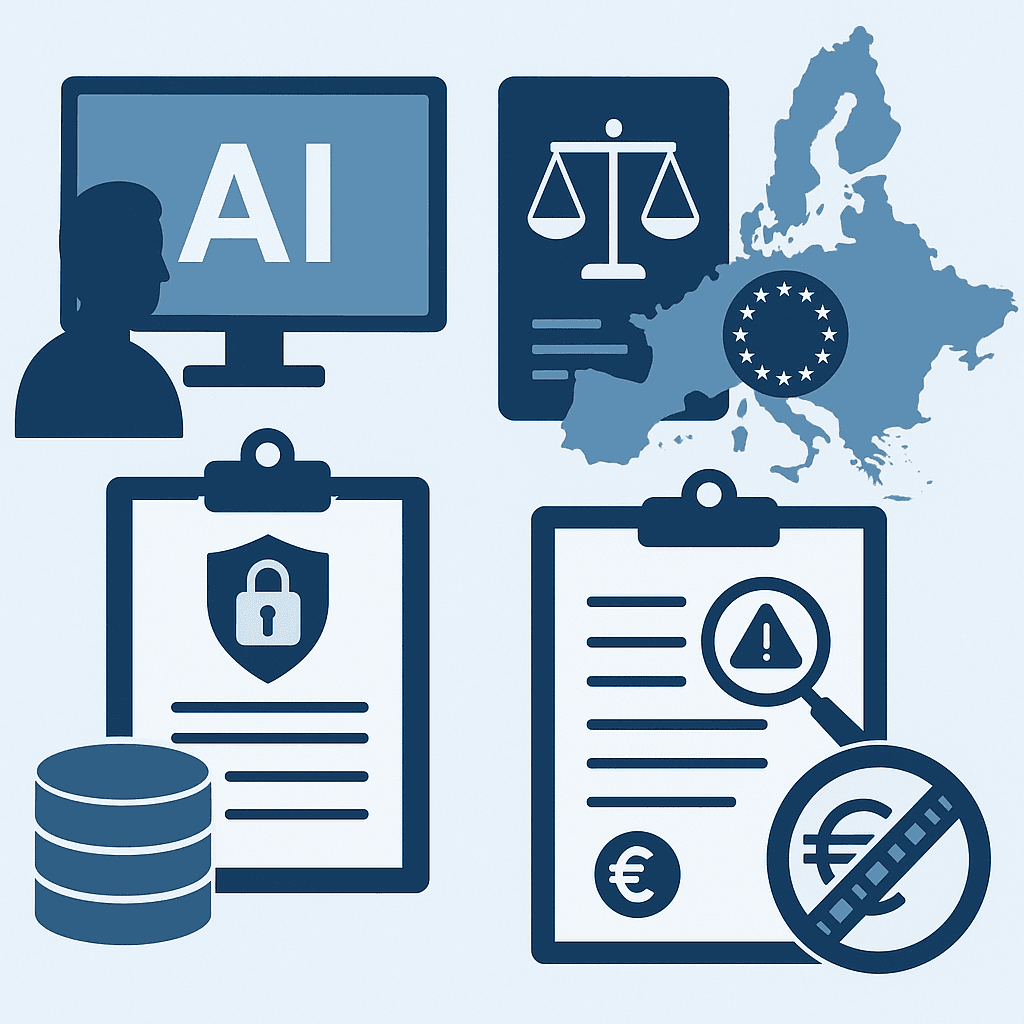
Update, 9 August 2026. The timeline described in this article has changed. The Digital Omnibus on AI, approved by the European Parliament on 16 June 2026 and by the Council on 29 June, deferred Annex III high-risk obligations to 2 December 2027 and Annex I embedded-system obligations to 2 August 2028. Article 50 transparency obligations, by contrast, have applied since 2 August 2026. What follows is the original 2025 text, kept as it was. For the current state, read The AI Act: what it actually requires.
Today, one of the most important regulations in recent years comes into force in Europe: the AI Act.
Although much of the media debate has focused on big tech companies or startups that create AI models, the reality is that this regulation affects any company that uses artificial intelligence in its activities.
Yes, yours too.
You might be using a tool like ChatGPT or Claude to draft texts, automate responses, or generate content. You might be part of a company that integrates AI solutions into its products or internal processes. In all these cases, the AI Act affects you as of today.
What exactly changes?
Starting this August 2, 2025, companies using what are known as General Purpose AI models (GPAI) —meaning those designed for multiple tasks— must comply with a series of obligations established by the European Union.
These obligations are not arbitrary. They are designed to ensure that artificial intelligence is used in a safe, transparent, and responsible manner.
Among other things, companies are required to:
- Report on the data used to train the AI, especially if it contains content protected by copyright.
- Clearly explain what the model does, how it works, and what risks it may pose.
- Implement real cybersecurity measures and demonstrate that the system is protected against malicious use.
- Conduct a risk assessment when the AI is used in contexts that could affect people.
And if the model you use is particularly powerful (for example, if it requires significant computing capacity), you will have to follow additional measures.
What if my company only uses AI but doesn't develop it?
That is one of the most common questions. And the answer is clear: it still applies to you.
The AI Act does not only regulate companies that create technology, but also those that use it.
If you integrate AI into your products, services, or processes —even if you didn't develop it yourself— you fall within the scope of this law.
And it doesn't matter if your company is in Europe or not. If you sell or provide services in the European market using AI, you must comply with the regulation.
What if I was already using artificial intelligence before today?
In that case, you have a bit more leeway. The European Union has provided an adaptation period: if the AI model you are using was implemented before August 2, 2025, you have until August 2027 to fully adapt.
But if you start using it now or in the future, you must comply from day one.
In other words: if your company decides today to incorporate a model like Claude or ChatGPT into its processes, the rules apply to you from the very beginning.
Is there any way to facilitate compliance?
Yes, and that's one of the good pieces of news.
Since July 10, the European Commission has launched a Code of Good Practices that you can adopt voluntarily.
This code includes clear and applicable recommendations to demonstrate that your company is making responsible use of AI:
- How to be more transparent about the data you use.
- How to protect the copyright of the content you work with.
- What minimum security measures you need.
Furthermore, adhering to this code gives you advantages: it can reduce the administrative burden, serve as proof of compliance to authorities, and show your customers that you are committed to an ethical and professional use of AI.
What do I do now? Where do I start?
You don't need to be a tech company or have a huge legal team to start complying.
In fact, there are some fairly simple steps you can take this very week:
This week:
- Make a list of the artificial intelligence tools you are using.
- Ask your providers if those models are considered "general purpose" (GPAI).
This month:
- Request technical documentation about those models. You don't need to understand everything, but you should keep that information.
- Evaluate with your team how you use AI, whether there are associated risks, and if you have sufficient protection against cyberattacks.
In the coming months:
- Consider adhering to the Code of Good Practices. It's not mandatory, but it can help you a lot.
- And, above all, stay informed: this is just the beginning. Starting in February 2026, potential penalties will come into effect for those who have not complied.
So... is this a threat or an opportunity?
It depends on how you approach it.
Many companies are already adapting, not just out of fear of fines. Also because demonstrating that you use AI responsibly can become a competitive advantage.
- It allows you to differentiate yourself from the competition.
- It reinforces your customers' trust.
- And it opens the door to new European programs supporting innovation and digitalization.
Sources:
https://artificialintelligenceact.eu/es/gpai-guidelines-overview